Posted on 5 Comments

Tall Stitch Virtuosity Class Resources

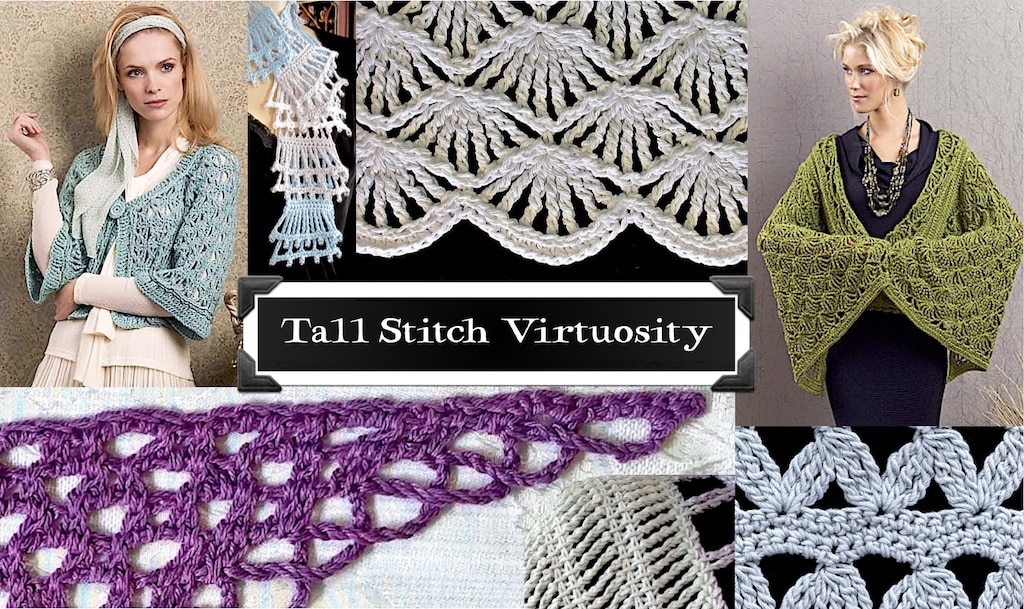
Collage of many examples for Tall Stitch Virtuosity Crochet Class by Vashti Braha

Tall Stitch Virtuosity is a new crochet class for 2020. I’ve discovered more than I imagined is possible about tall stitches! In fact, the official class graphic above is about six months old and already seems out of date.

Originally scheduled for the July 2020 Chain Link conference (an annual national event of the CGOA), Tall Stitch Virtuosity is now virtual. The traditional in-person conference is postponed until next summer. The virtual version is split into one-hour sessions over three consecutive days.

This is the first resource page I’ve created for a virtual class. At first I thought a virtual class wouldn’t need one. I started these pages back in 2012 to make online links easy to visit for an in-person event. I’m finding that I don’t want to load up the class handout (a PDF in this case) with what I think of as miscellany. Also, members might have a chance to visit this page over the three days of the class.

— Vashti Braha

Tall Stitch Virtuosity 2020
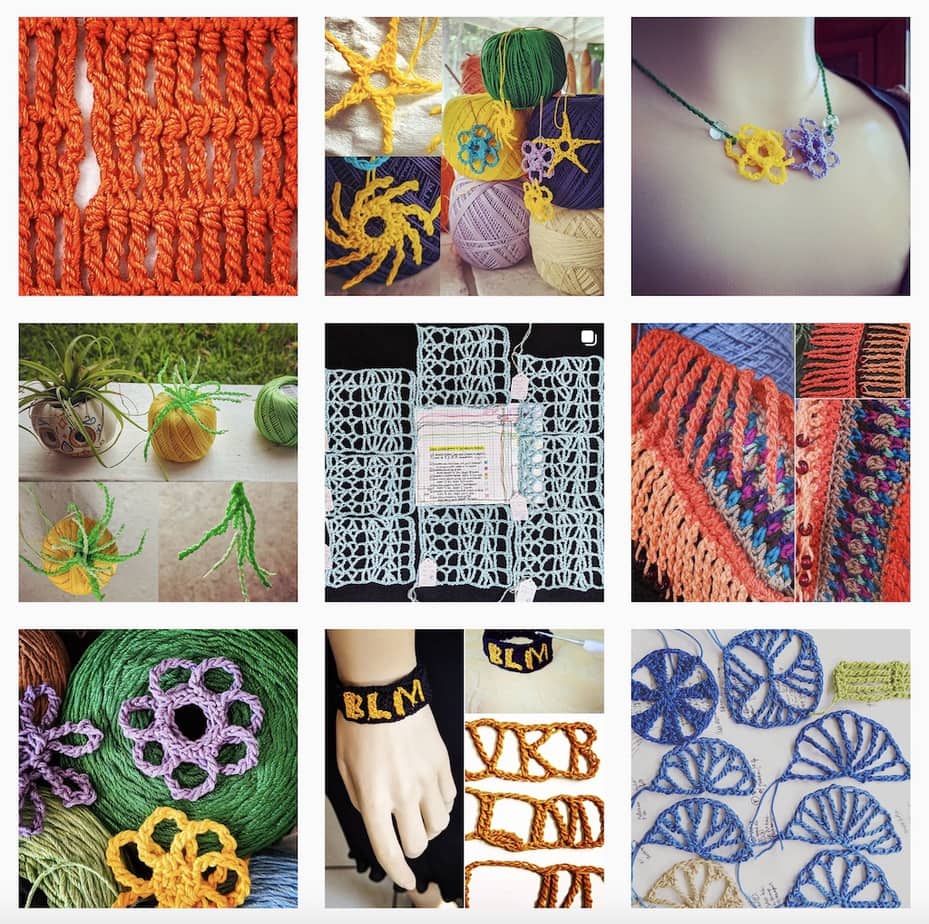
Nine tall stitch crochet experiments that I've posted recently in my Instagram feed.
Recent tall stitch swatches I’ve posted to my Instagram feed.

Newsletter Issues & Blog Posts

These are issues of my Crochet Inspirations Newsletter, and blog posts, spanning 2010 to today. Keep in mind that many links in pre-2018 newsletter issues are broken.

Tall Stitch Patterns

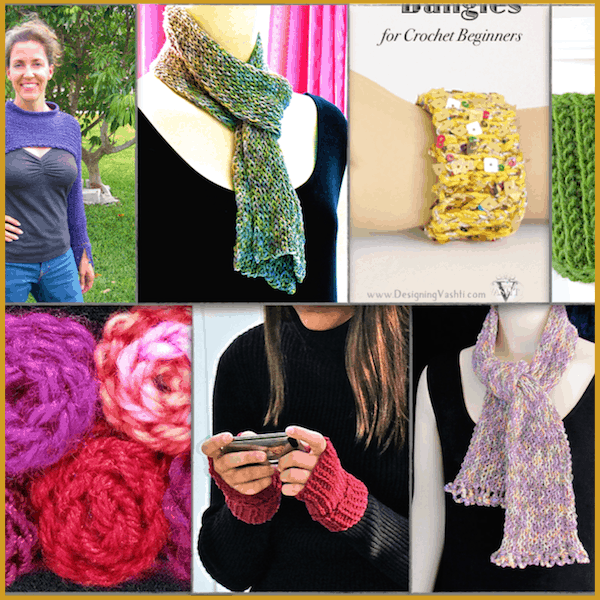
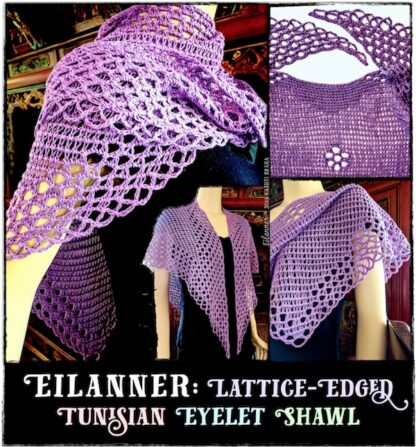
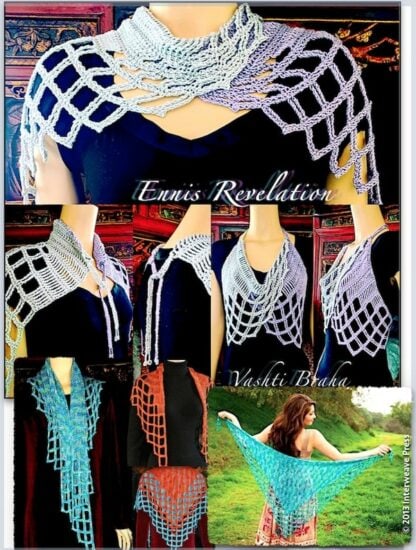
Some of my published tall stitch patterns over the years. Half of them are Tunisian crochet. Click an image for more info. Missing: Cats Eye Lariat (in Ravelry) and Twinkle Links.
Tall Stitch Projects & Swatches

Tall Stitches Around the World Web

  • Tall Crochet Stitch Artistry pinboard (Pinterest)
  • Bloggers on the lack of tall stitches:
    • Jenny Guldin: “Most lists of the basic crochet stitches end with the triple crochet. Call it a new technique, or call it breaking the rules: I’m tired of being limited to the height of a triple crochet, and I’m not going to take it anymore! Why isn’t there a taller stitch? I’ve received varying answers from many crocheters, but I’ve never heard the suggestion “try it”. There are two basic points of view I’ve heard about the subject: It doesn’t exist, or, there’s no purpose for it. With all due respect, I have two responses: I’ve made it exist, and there is a purpose.”
    • CrochetSpot’s Amy Yarbrough: “These stitches are not very well known today because most modern crochet patterns do not use them. This begs the question, when are they used then? Perhaps the most I have seen these taller stitches used would be in patterns with crochet thread. Such as Irish Crochet Lace, crocheted Antebellum Dolls, and crocheted Doilies.”

Issue 102: Wild Whys of Y-Stitches

Crochet Inspirations Newsletter sent to 8,600 subscribers on June 13, 2020.
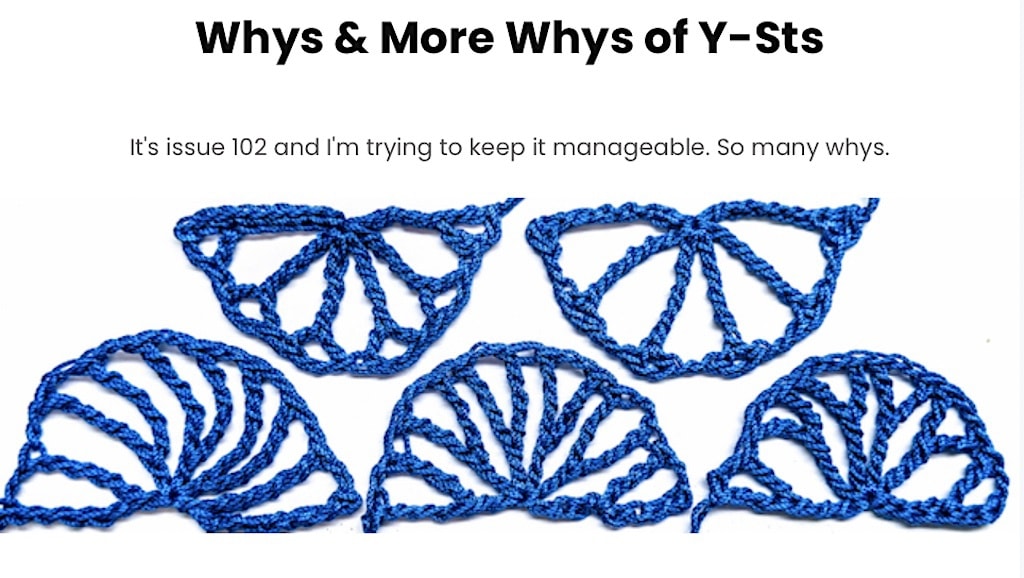
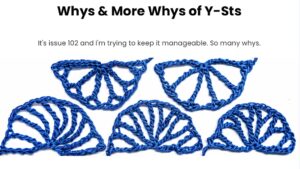
Very tall stitches shown as 5 kinds of Y stitches for improving semicircle shapes
(Original header)

These semi-circles are crocheted of Y-shaped stitches. In each case I started with a quadruple-treble stitch (quad; in the UK and AUS I do believe it’s a quint). Yarn over 5x to begin one. After each completed quad I chained 2, then crocheted a shorter stitch into the side of the quad to turn it into a Y-stitch (Y-st).

I’m going to call the shorter stitch a branch that is crocheted into the taller one, or host stitch

The Y-sts in these semi-circles vary from very deep (farthest left one) to very shallow (upper right). The longest branch, a triple treble (I yarned over 4x to begin it), is crocheted close to the base of its host quad. The shortest branch is a half double (hdc in the US, htr in UK/AUS). I crocheted it up close to the top of the quad.

Don’t you love how the lacy look changes just from this simple difference?

I also really love how Y-sts look when they radiate from a center. It’s what lured me down a rabbit hole of new delights.

Every stitch you see in this newsletter is my own new stuff.
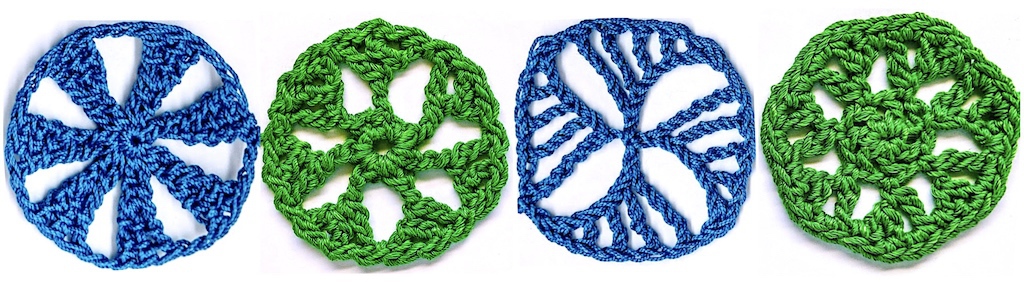
Four tall stitch circles with new looks thanks to the branches you can add to the sides of them

Branched? “Rune” Stitches?

I searched 34 crochet books for these stitches (16 are stitch dictionaries and the rest are guides to crocheting). Of the 34, 14 at least mention X-stitches. Very few include Y’s and inverted Y’s, or really run with with any of them. 

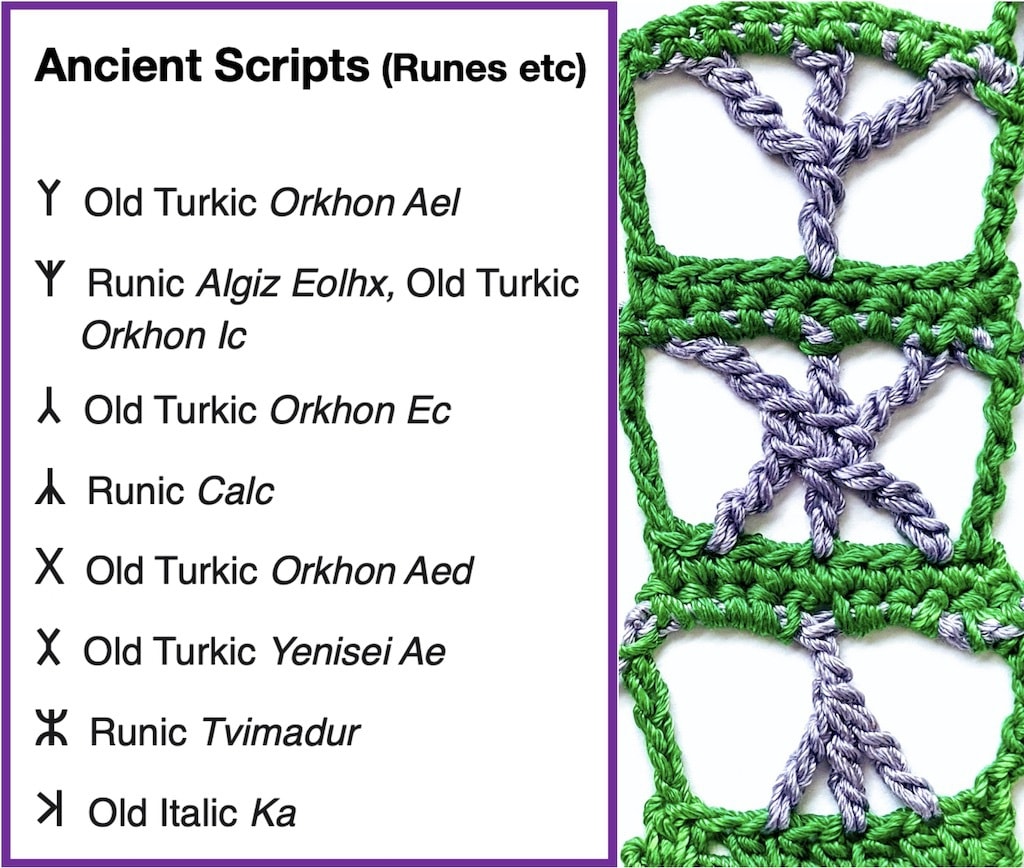
When I think of “Y-stitches” I picture a category of stitches that remind me of runes and ancient symbols! 
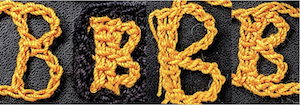
Bend a tall stitch or two to form letter shapes

The list above is about half of some old letters I’d like to try crocheting with branchy tall stitches. See my swatch of a few modern letters in Instagram. (These crazy B’s are for Braha and for Black, as in Black lives matter, and for Because of course they do.)

The first blue wheel above was inspired by ancient wedge-shaped cuneiform strokes. I see the green motifs as being Druidic wheels of seven “trees”. In fact, lately I see Y-stitches all over the place in nature!

Key Y-Thinkers

My three favorite sources on these stitches: James Walters, Duplet magazines (Irene Duplet), and Sheruknitting videos (Elena Rugal). It’s not a stitch shape. It’s a way of thinkingThank you so much James, Irene, and Elena!
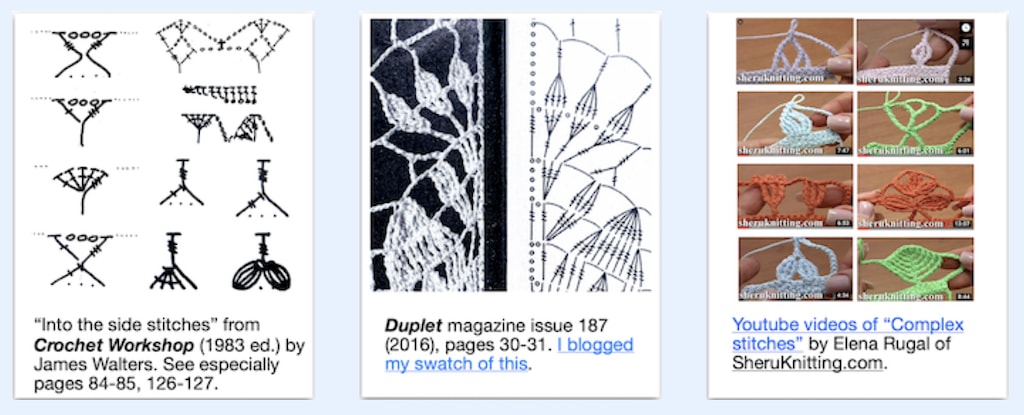
Examples of tall stitch artistry by James Walters, Irene Duplet, Elena Rugal

How To?

I need to blog that. I have ideas for how to sort out the yarn overs, and make the most of them for motifs. Until then, I mention Y-stitches with a how-to link in my tall-stitch circles blog post. Also try some Sheruknitting videos. 

Can you spot the Y-sts? And X-sts in the upper-right blue circle? Y’s are fabulous for reducing the number of tall stitches in round one AND for suavely doubling every stitch as required in round two.

Using tall stitches for circles is how I got here. I had no idea how practical and problem-solving Y-sts could be for crocheting circles—the taller, the better. They offer creative solutions and pretty options for tall-stitch circle crocheting!

OK One More Y-Why for Today:

Convert Two Rows into One

[This section got its own blog post a few weeks later; the light green swatch referred to is also pictured there.]

Sometimes, two or even three rows of a stitch pattern can be turned into one row, using using taller into-the-side stitches. Here’s a two-row shell-and-cluster stitch pattern (upper swatch) turned into one-row one lower swatch). 

You can get more stitches to face the front this way. It also removes a “grid” effect caused by the connections between every stitch across a row. It fits in the “clever substitutions” category which is the topic of newsletter #92.

That grid effect adds structure to the fabric. Removing them adds more drape. So it depends on the yarn and project.
Posted on 4 Comments

Slip Stitch Crochet Class Resources

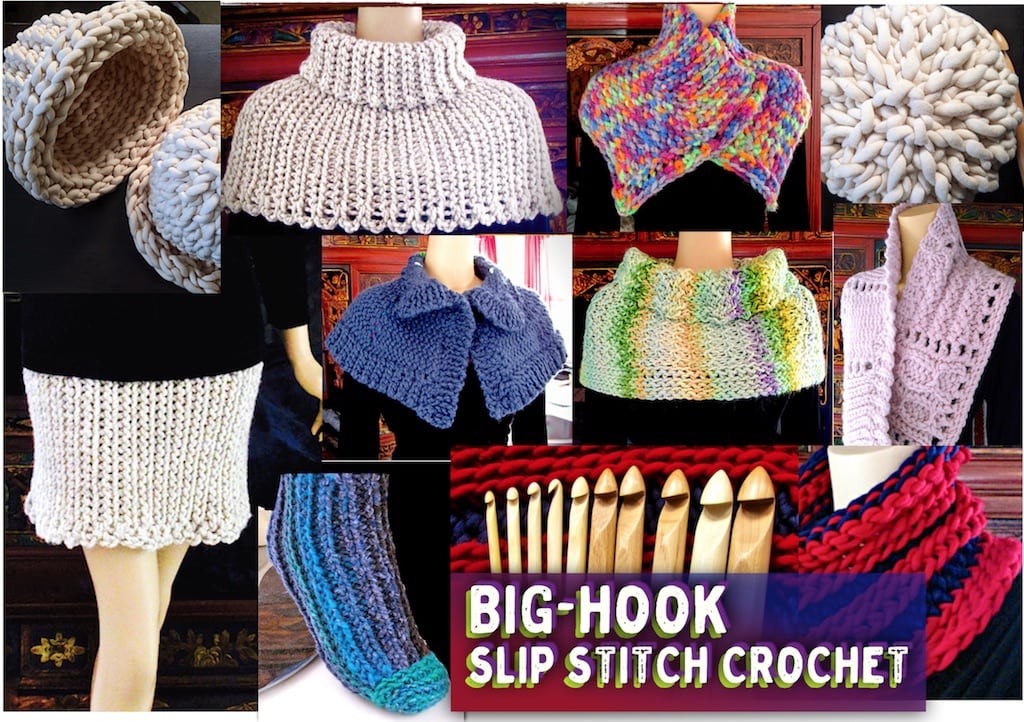
Collage of many examples for Big-Hook Slip Stitch Crochet Class by Vashti Braha
Updated July 20, 2020. First posted in 2012.

This clickable list of slip stitch crochet resources is mainly to aid students of my classes in exploring more about Slip Stitch Crochet at their leisure. (If you have not yet taken any of my slip stitch classes, I hope someday I’ll meet you in one of them!) You’re welcome to enjoy the links below whether you’ve taken the classes or not. They represent the extra information that doesn’t fit into a standard three-hour class. Some are the names of designers, books, other types of slip stitch crochet, etc., that I may have mentioned in a class.

— Vashti Braha

Slip Stitch Crochet Class Resources 2020

Slip Stitch Crochet Designs

Relevant Crochet Inspirations Newsletter Issues

Related Blog Posts

Special to Big Hook Crocheting

Slip Stitching Around the Internet

Slip Stitch Crochet Books of Interest

  1. Tanja Osswald’s Kettmaschen (in German)
  2. Nancy Nehring’s Learn Slip Stitch Crochet and Slip Stitch Caps
  3. Bendy Carter’s Knit 1 Purl 2 in Crochet.
  4. Dora Ohrenstein’s designs and articles in Interweave Crochet magazine, Fall 2010 and Winter 2011 issues.

Posted on

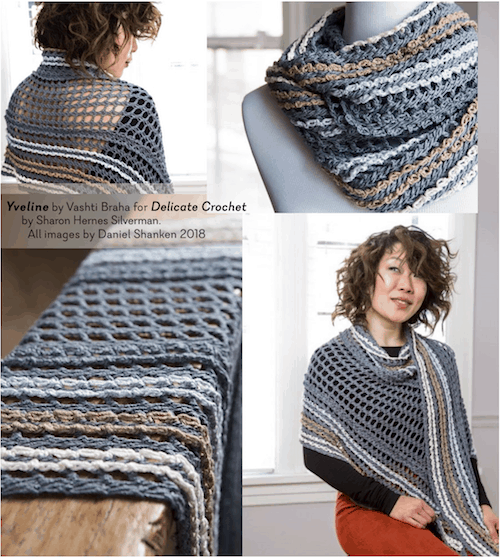
First Look: Yveline, a Tunisian Wrap

Photos by Daniel Shanken
All Images © 2018.  Photographer: Daniel Shanken for Stackpole Books. View hi-res.

I’ve been looking forward to sharing some sneak peeks! You’re looking at Tunisian crochet eyelets on the diagonal, frilled ? with love knots ?. I used our Lotus yarn in these colors: Carbonite, Pearly Pearl, Satin Grey, and Lustrous Tan.

Yveline is one of two new crochet patterns I contributed to a forthcoming book. It’s called Delicate Crochet: 23 Light and Pretty Designs for Shawls, Tops and More by Sharon Hernes Silverman. The book’s official publication date is December 1, but look for it as early as October. 

Yveline Goes to Class

I’ll be traveling with Yveline to the CGOA crochet conference in Portland OR next month because she wants to meet everyone who is taking the Tunisian Crochet on the Diagonal class AND 21st Century Love Knot Adventures.

If you’re going to the conference and you took one of my earlier Tunisian lace classes, Yveline will want to meet you too. I brought swatches to those earlier classes that have since come of age in the form of the lovely Yveline.

Her Story

First, the name. It started out “Lean In” because that’s what I called the early swatches. It fascinated me how much some Tunisian stitches liked to lean with a little encouragement. Not just how much, but the kind of movement; sometimes it’s like Tunisian lace stitches have hinges or ball joints.

When it came time for a grown up name, I was in a dual swoon from binge-watching the Versailles series while adding the love knot frills! I looked for names associated with Versailles and learned that the city is located in a département called Yvelines.

About Those Love Knots

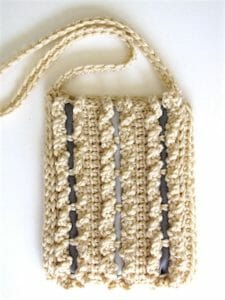
Wallet-sized beige cashmere bag of Tunisian crochet, embellished with double ruffles, woven with grey satin ribbons.
A small bag I designed 9 years ago inspired the ruffle idea. Image missing? View it here.

I’m still swooning a bit from using love knots for surface embellishment. I haven’t seen anyone else do this and it’s just the kind of odd new thing I like to try each time I teach 21st Century Love Knot Adventures. (I mean, look at what I called the class.)

It did take several swatches. Remember last year when I did a newsletter on ruffles? It was shortly after I shipped Yveline to Sharon, the book author. I’d been swatching and meditating on the essence of a crocheted ruffle for a few months.

The Tunisian eyelet fabric is so airy and “flexy” (another name I gave to the early swatches) that most of the ruffles I tried were too heavy. I love how airy the love knot frills are! Love!

About the Ruffle Idea

The urge to frill has a story too. Years ago I crocheted the cutest little bag. It’s Tunisian simple stitch with ruffles surface-crocheted on it.

So that’s my Delicate Crochet story of Yveline. I have a very different story coming up about the other design I did for the book!

Posted on

New Angle on Diagonal Tunisian

A diagonal corner of the Four Peaks scarf.

I put off writing about the Tunisian on the Diagonal class because I kept feeling like I had nothing to say, but also too much! Here’s another paradox: I feel like I’ve been teaching this class since 2010 and yet I never have, exactly. How can all of this be true?

I figured it out after writing the section about its 2009 roots below. Crocheting Tunisian diagonally is a huge topic based upon simple and powerful principles. Vary one thing a little, factor in some momentum, and everything ends up dramatically different.

I’ve taught big sections of this. The 2018 class will be the master class. (It’s great for all skill levels, thanks to the “simple principles” part I just mentioned.)

For contrast, travel back to 2009 with me for a bit.

2009 Tunisian Increase Methods

Nine years ago my first diagonal crochet design happened: the Five Peaks Shawl prototype. (The pattern was published in 2010 in Interweave Crochet Magazine).

Left triangular swatch is starting to curl along one edge. Other triangle is symmetrical with nice drape.
Effect of the “squeeze-it-in” method shows in the left swatch. Not recommended for a shawl.

 There was almost nothing on diagonal Tunisian crochet from corner to corner, or “C2C”. With C2C you increase steadily along both row ends to widen, then decrease steadily until you end at the opposite corner.

The default increase method back then didn’t have a symmetrical, polished drape. I blogged about it (and the photo at right) in June 2009 because that’s when I was working out the increase method for the Five Peaks Shawl.

2009 Tunisian Hook Choices

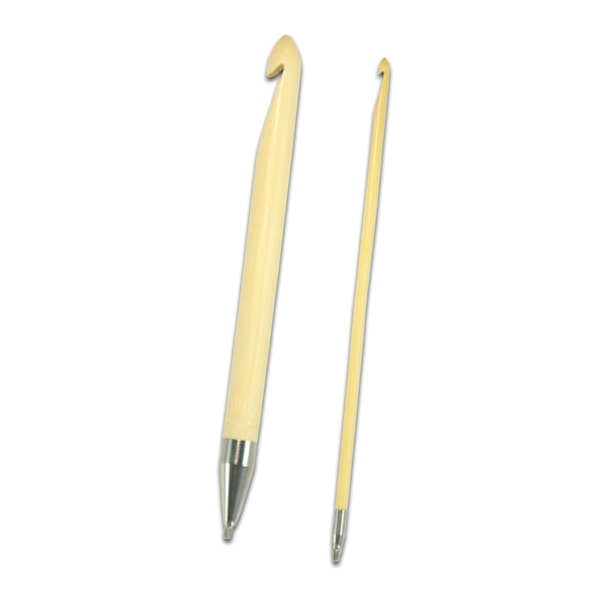
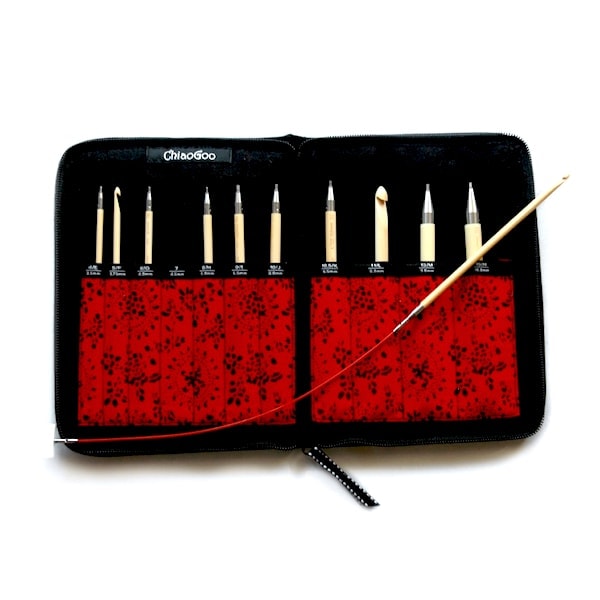
Tunisian crochet hooks larger than size 6.0 mm (J) were scarce in any style and length, whether straight, flexible, double-ended, short, or long. When you found one, you put up with whatever its material, surface finish, and hook shape was. Remember that?

My options were either a long straight 6.5 mm (K) or a discontinued 9 mm (“M/N”) flexible hook from eBay. I needed a size between these two. Too bad!

Back then, publishers needed designers to use crochet hooks that were commonly available in stores. I worried that I wouldn’t be able to sell the Five Peaks pattern to a magazine. Fortunately, Tunisian hook choices were improving. Only three months later I blogged “Heaven is a Crochet Hook for Every Need”. Nowadays I keep a range of Tunisian hook sizes and lengths.

The Evolving Tunisian Crocheter

We Tunisian crocheters have been enjoying a renaissance for our craft! It had barely started in 2009. Back then, most crocheters still assumed the nature of Tunisian crochet was to be thick, kind of stiff, and with a stubborn curl. Not something that could cascade and swing from the shoulders like a waterfall, or look like a lacy weightless veil.

Each time I’ve taught a Tunisian crochet class since 2010, the students bring more skills and experience to the room. Newer Tunisian crocheters understand things faster. This became really noticeable around 2013. 

Five Peaks classes were the first I taught on diagonal Tunisian crochet. It was ahead of its time in 2009. Since then I’ve learned to start every Tunisian topic with a quick review of the relevant basics. People of all skill levels seem to welcome this. It seems to pull together and standardize the new things everyone is learning from different designers. 

For 2018 I’m excited to be starting out with a review of a different set of basics because when we crochet Tunisian on the diagonal, there are clues we can be looking for but may not recognize for awhile. Things may look wrong for awhile and yet be so, so right. 

Posted on

Creative Planned Pooling: Class Resources

Creative Planned Color Pooling Crochet Class 2018 Vashti Braha
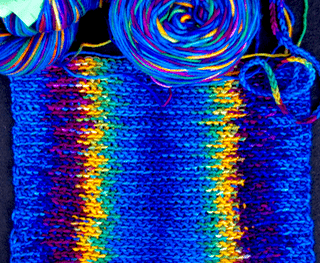
Updated on 7/18/18. View the high-res image. This is a conveniently clickable group of things I mention and display in Creative Planned Color Pooling classes. I teach the next one on July 28, 2018 in Portland OR. (An earlier version of this class was called “Crochet Stitch Games” and included game-like serendipity techniques; between then and now, planned pooling has become a popular technique!).     — Vashti Braha


Thinking of signing up for this class? I wrote Color Pooling Developments with you in mind.

Crochet Patterns & Crochet Alongs

  • Jempool pattern. It’s the blue scarf on the left in the above photo.
  • Crochet AlongThe Jempool CAL (a source of some great info!)
  • See all of Vashti’s color pooling projects and swatches at this self-updating Ravelry link (log in to Ravelry first to see all of them).
  • Crochet to the Color Playbook pattern set. (This is a freeform “stitch pooling” way to modify accidental pooling, rather than doing planned pooling.)

Recommended Issues of Vashti’s Crochet Inspirations Newsletter

My Color Pooling Blog Posts

Photo Albums & Inspiration Boards

Recommended Color Pooling Sites

  • PlannedPooling.com where you can plot the color sequences of your yarn and see how it pools based on your plan.
  • Pooled Knits Ravelry group.
    • This group is how I first found member sanne7788 who does the most inspiring pooled Tunisian crochet I’ve seen so far! (Scroll down to see them all.)
  • Planned Pooling With Crochet Facebook group for crocheting argyles, founded by Summer Cromartie. Especially see Brenda-Leigh Bennett’s 10/21/16 resource page there!
  • Deborah Bagley wrote a meaty multi-part series on several kinds of planned pooling. Start with the introductory roundup of it: Hook and Learn: A Feast for Your Color Pooling Eyes.
  • Laura Bryant: Ikat knitting effects with her ikat-style hand dyed Prism yarns, featured in Vogue Knitting. I took Laura’s pooling class at my local yarn shop and here’s my ikat attempt with slip stitch crochet.
    • If I had to pick only ONE book to read about planned pooling, it would be her 2013 Artful Color, Mindful Knits: The Definitive Guide to Working with Hand-dyed Yarn.
  • Marly Bird: Fantastic YouTube videos and blog posts for crochet planned pooling that argyles.
  • Glamour4You, Sewrella, Rockin’Lola (her granny stitch argyle guest post), Naztazia: Bloggers with popular tutorials for crocheting pooled argyles. Also see Kathy Lashley‘s post, a rare one on the “lightning bolt” effect when pooling in the round, and Kinga Erdem who explains her bold zigzag argyle using just half double crochets [UK: htr].
  • Karla Stuebing: 2013 article, “Art and Science of Planned Pooling.” It’s about knitting but very inspiring for crochet.
  • Wannietta Prescod: this blog post links to her earliest inspiration and to her influential Sweetspot 2009 article for Knitty.
  • Planned pooling crochet patterns, a self-updating link: Ravelry doesn’t seem to have a category for this technique yet, so I used the keyword “pooling”. Of 23 search results it looks like 20 are true planned pooling. Of these, 17 are argyles, and most appear to be seed stitch (as of 4/16/18).
  • Planned pooling knitting patterns, a self-updating link: as with the crochet search link above, I used a keyword search. Of the 91 results (as of 4/16/18), about 80 are true planned pooling designs.

Any Books on Planned Pooling with Crochet?

  • Found one! Yarn Pooling Made Easy by Marly Bird. Published by Leisure Arts, 2017.